
About 4.5 billion years ago, when the solar system and planets were formed, Earth and Mars were born around the same time from similar materials. But why is it that life is thriving and flourishing so much on Earth, while there’s no sign of life on Mars?
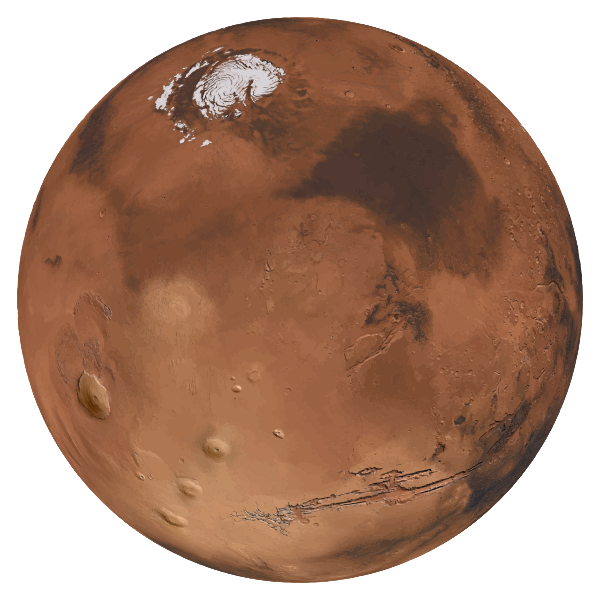
Some might argue that Mars doesn’t have oxygen, has too much radiation, extreme temperatures, and no water. But none of these things were present on Earth either, at least not initially. Earth didn’t have oxygen, radiation levels were high, and temperatures weren’t exactly livable. Yet, considering the conditions back then, suitable life existed here, and It took billions of years to evolve.
Mars is a really strong candidate for life to evolve. Maybe life started evolving there a few billion or million years later, or maybe there are some factors that are stopping life from evolving. That’s why, even 100 years ago, before NASA was even formed, scientists have been interested in life on Mars because it’s quite similar to Earth. A day there is about 24 hours, it has a mild, thin atmosphere, and even its poles have ice caps. Scientists got interested in Mars because there’s a really important thing found there that actually kick-started life on Earth even without oxygen. There’s so much water ice piled up at Mars’ north and south poles that if it all melted, it could create an ocean 22 meters deep covering the whole planet. So now, the entire space exploration world is focused on whether we can develop life on Mars or if humans can go there and settle down, build colonies. Can we become Martians? Let’s explore!
We can call Mars Earth’s cold little sister because they formed almost the same way. Mars is about half the size of Earth, so its gravity is only about one-third compared to Earth’s. Mars has a very thin atmosphere, much less dense—so much less that the atmospheric pressure there is just 1% of Earth’s. And this atmosphere is made up of 95% CO2. Now, CO2 is a greenhouse gas that causes global warming. The planet gets warm. Solar light gets trapped. But here, it’s present in such a small amount that it can’t trap sunlight. That’s why the temperature on Mars fluctuates between 100 degrees during the day and night. The biggest problem is that Mars gets hit by solar radiation and UV rays because there’s no ozone layer or atmosphere to block them. Plus, Mars doesn’t have its own built-in magnetic field like Earth does. Earth’s magnetic field deflects charged particles coming from space and the sun. When charged particles attack the planet at the speed of light, on Earth, they get deflected, so we’re protected and life survives. But on Mars, these particles hit the surface directly.
| Size / Diameter | Gravity | Day | Year | Atmospheric Pressure | |
| Earth | 12,742 km | 1 g (9.8 m/s²) | 24 hr. | 1 yr. | 1,01,325 Pa |
| Mars | 6,779 km | 0.38 g (3.71 m/s²) | 24 hr. 39 min. 35.24 sec. | 1.88 year | 610 Pa |
Table: General Comparison between Earth and Mars.
So why do humans want to go to Mars? Why aren’t we happy just living on Earth? Because ever since humans evolved around 400,000 years ago, we’ve learned one thing really well. Survival isn’t just about the individual, it’s about the species. For that, we migrated to every corner of the world and learned how to hunt. We’ve created all kinds of tools, learned how to farm, and figured out how to live in society. And to survive in that society, humans have learned to prepare for every possible danger and scenario.
So why do humans want to settle on Mars? As a backup plan, to protect us from any future threats—whether it’s an asteroid hitting Earth, global warming, or a pandemic. Our society would have a survival option, a backup plan.
Now, let’s talk about something else interesting. For backup survival, we discussed going to Mars. But why only Mars? Because Mercury and Venus just aren’t livable. They’re too close to the Sun and way too hot. Jupiter, Saturn, Uranus, and Neptune are all gas giants. They don’t even have solid ground, so you can’t settle there. There is a strong contender—Saturn’s moon Titan—but it’s really far away, so practically, it’s not possible.
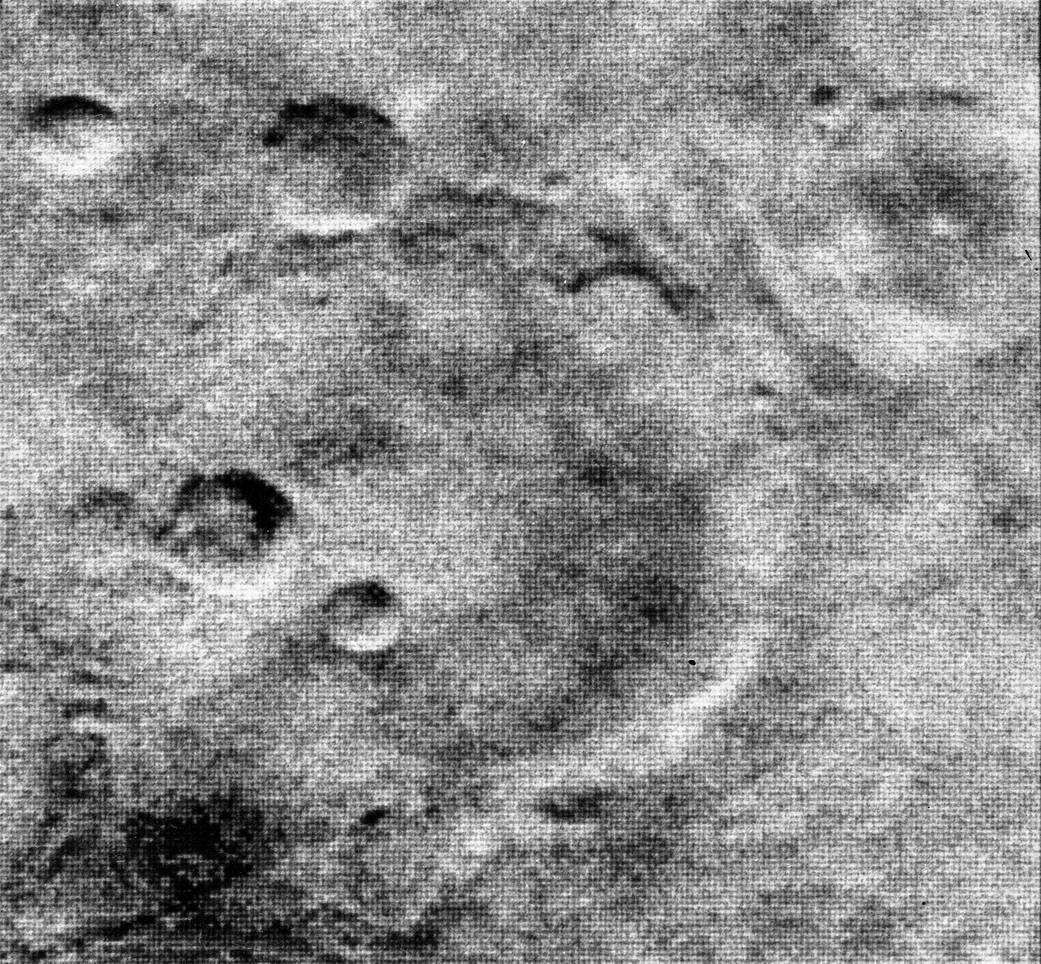
The least possible option is Mars. About 100 to 150 years ago, before NASA or any space agency even existed, people started observing the surface of Mars using telescopes. By the late 19th century, observers noticed polar white regions on Mars’ surface. They also saw lots of dark spots, canals, and tunnels. This made many scientists imagine that these canals were water channels, carrying melted water from the polar ice all the way to the equator. It was possible that some intelligent life might be living there. That’s why Mars sparked strong interest in every country. At that time, the two superpowers, the USA and the USSR (the Soviet Union), got into a space race. Both countries wanted to be the first to go into space, to the moon, and to Mars. After many failed attempts, in 1964, the USA’s Mariner 4 project finally succeeded and orbited Mars. Mariner 4 sent back images from Mars’ orbit, which made one thing clear about Mars. Mars is not a living planet.
Mariner 4 had some sensors that sent data back to scientists, and this data crushed all hopes of living on Mars. It showed that the surface temperature on Mars during the day goes above 100°C. The atmospheric pressure is just 1% of Earth’s, and Mars has no way to protect against solar or UV radiation. Its surface is constantly bombarded by cosmic charged particles. But clearly, even after all these discoveries, humanity still wants to go to Mars.
They never gave up. Explorations kept going, and for the first time in 1976, the USA’s Viking landers touched down on Mars’ surface and sent back some pictures. From those images, we found out that Mars’ terrain is pretty rocky. Scientists also discovered that there must have been flooding on Mars’ surface at some point, with rivers flowing there once. Basically, about 4.5 billion years ago, when Earth and Mars were made from the same kind of material, Mars probably looked a lot like Earth—completely covered in water. But Mars has very low atmospheric pressure. When the atmospheric pressure is really low, almost like a vacuum, frozen water ice directly turns into gas by sublimation. It never becomes liquid water. Gradually, the water on Mars sublimated and escaped into space because Mars didn’t have any atmosphere or mechanism to hold it in. Scientists started to believe this theory.
Then, 30 years later in 2008, NASA’s Phoenix lander made another discovery. Phoenix landed near Mars’ pole, scraped a bit of the surface there, and for four days at that spot photos were taken at different intervals. These photos clearly showed that beneath Mars’ soil, called regolith, there is frozen water. As soon as this soil was removed, the frozen water directly sublimated into gas. This meant that not only is there ice at Mars’ poles, but even far from the poles, water ice could be trapped beneath the sand. And finding this water is the basis for hope of life on Mars. Because with water, anything is possible. Crops can be grown, and it can be broken down to make rocket fuel.
You can break down hydrogen to get oxygen for breathing. Even if you evaporate water and release a lot of water vapor into Mars’ atmosphere, it would act like a greenhouse gas. That would warm Mars up a bit, which would stop the big temperature swings between day and night, making the temperature more stable. The ice at the poles would melt gradually as Mars warms up, possibly creating several water bodies or oceans. Although, compared to Earth, Mars has very little water. But still. If all the ice on the poles melted, it could create an ocean about 22 meters deep all around Mars. But just having water on Mars isn’t enough to live there. Today, human space technology is so advanced that we’re not worried about getting to Mars anymore. In fact, by 2029-30, SpaceX is planning to send a manned mission to Mars. The big question for us is, how do we survive once we get there? Because for humans to live on Mars, we need to figure out how to get food, water, and shelter. We need all that.
You’d have to bring everything from Earth, which is practically impossible. Rockets sent from Earth to Mars aren’t just expensive—they also have very limited space. Plus, the launch window to send rockets to Mars only comes once every 26 months, when Mars is closest to Earth in its orbit. Even then, the distance between Earth and Mars is about 1,500 times greater than the distance between Earth and the Moon. This means if we want to stay on Mars for any extended period, we’ll have to produce water, food, and shelter right there on Mars.
Water on Mars. There’s plenty of water, but most of it is at the poles, and the temperatures suitable for living are around the equator. So, right now, humans don’t have any way to bring water from the poles to the equator. Our technology just isn’t advanced enough yet. Until we invent a way to transport water from the poles to the equator, water conservation is the only option. The same water conservation methods used on the International Space Station will be used by the first people settling on Mars. Not a single drop of water is wasted on the International Space Station. In fact, even urine and sweat are recycled to make water there. Similarly, we can’t grow anything on Mars right now because the soil there has no organic material at all. The radiation is so intense that plants can’t survive. So, plants will have to be grown in specialized weather-controlled greenhouses with nutrient-rich solutions, maintaining a controlled temperature. And lastly, when it comes to shelter, NASA is running a lot of experiments using Mars’ regolith, which is the Martian soil.
Scientists are exploring how to use Martian soil mixed with some additives to 3D print shelters. Another discovery is that beneath Mars’ surface, there are many lava channels that used to carry lava but are now hollow. There are some underground caves. Humans could settle inside these caves, which would protect them from cosmic particles and radiation. But of course, to settle on Mars, we’d always have to stay in a spacesuit and wear an oxygen mask.
All these solutions are just surface-level. They’re fine for a one-time trip, but if we want to set up a long-term colony on Mars, none of these will work. To live permanently on Mars, we’ll have to make a bunch of changes to the planet itself. This is called terraforming. Terraforming means adjusting or modifying a planet’s atmosphere and surface temperature to suit our needs. To start terraforming, the first step is to somehow heat up Mars. That way, the polar ice caps.
If it melts, the water will turn into ice water vapor and go into Mars’ atmosphere, acting like a greenhouse gas. It will trap solar radiation and capture heat, warming Mars even more. It’s like a chain reaction that will slowly start heating Mars up. Eventually, when a lot of gases build up in Mars’ atmosphere, it will become thick enough to support liquid water. So, when the polar ice melts, liquid water bodies will form. Ultimately, with the atmosphere thickening…
The arrival of greenhouse gases will also reduce the day and night temperature fluctuations on Mars. The temperature there will start to become a bit more livable. There are many ideas, and one of them is to divert, deflect, and blast a bunch of meteorites onto Mars. The plan is to crash at least 10,000 meteorites there. Meteorites are generally rich in oxygen and nitrogen. When they bombard the surface of Mars, they’ll bring those gases along with them. The bombardment will also generate a lot of heat. Mars’ atmosphere will become a bit thicker. This thickening might cause some greenhouse effect. Another idea Elon Musk suggested is to place satellites around Mars with huge reflectors that continuously direct sunlight towards Mars. When a lot of sunlight gets focused on Mars like that, the polar ice will melt. The atmosphere there will become rich with water vapor, creating a greenhouse effect. The atmosphere will get a bit thicker, which will also reduce harmful solar UV radiation.
But all of this. Even then, one problem will persist on Mars, and that’s the lack of a magnetic field. Because Mars doesn’t have this magnetic field, a lot of cosmic charged particles and solar particles hit its surface directly—something that doesn’t happen on Earth because they get deflected. One possible solution to create this magnetic field involves Mars’ moon called Phobos. Phobos has a lot of charged particles. If, by some mechanism, these charged particles could be taken from Phobos and held in orbit around Mars. If you keep orbiting Mars like this, these charged particles moving around will create a current around Mars. This current will induce a magnetic field there. But this is still a very theoretical concept. No one really knows how to do it.
All these processes that would terraform Mars aren’t things that will happen in 10, 20, or 50 years. Terraforming could take many centuries, even thousands of years. Humanity has thought about it, but not as something immediate. This is a long-term plan to conquer Mars. Until Mars is terraformed, humanity’s goal is to figure out how astronauts can go there, build a station, and live for some days or years.
Let’s imagine a scenario. We’ve terraformed Mars and humans have settled there. What changes will happen inside humans? Will humans be able to survive on Mars? The biggest challenge for humans will be Mars’ gravity. Mars’ gravity is only about one-third of Earth’s. This means humans would have to put in less effort to live there. They’d lose muscle and their bone density would drop. This has been observed in astronauts who stay on the space station—they also experience lower bone density and muscle loss. Humans living on Mars would have their hearts shrink because the heart wouldn’t need to work as hard to pump blood. Our body fluids would shift towards the upper parts of the body due to lower gravity, which would cause our heads to swell up a bit. Because it will be filled with fluid.
But the really amazing and interesting changes will happen when humans somehow learn to reproduce on Mars. If humans start building colonies on Mars and having offspring there, those offspring will undergo a lot of genetic changes. According to Charles Darwin’s survival of the fittest theory, traits that help us survive in an unfavorable atmosphere will be passed on more strongly to the next generation. And those offspring without favorable traits wouldn’t survive much longer and wouldn’t be able to have offspring. The very first genetic change that happens is in skin color. We humans have skin color based on the part of the Earth we live in. That’s because our skin has a natural sunscreen—a pigment called eumelanin. This eumelanin blocks 99% of UV radiation from entering our bodies. In places where solar radiation is higher, like African countries or near the equator, there’s more eumelanin, there’s more pigment, which is why people’s skin tends to be brown or black. In temperate regions like European and northern countries, where solar radiation doesn’t hit directly, people have less melanin in their skin. That’s why their skin color is fairer. Scientists predict that, considering the radiation on Mars, humans might develop a new pigment that looks orange. Also, since bone density will decrease on Mars, genetic changes are expected.
Humans on Mars will probably have thicker skeletons. Their bones will be a bit denser to make up for the lower bone density caused by the environment. Over time, their offspring will have slightly smaller hearts and bigger skulls. But the biggest change will be in certain genes that prevent cancer—they’ll become more common in future generations because cancer will be a huge problem on Mars due to UV radiation. Eventually, humans living on Mars will look quite different compared to those on Earth.
Trades will develop within them. A new human species will begin on Mars called the Marshals. But that’s still a long way off.
Meanwhile, check out the article on the evolution of life on Earth.